
From transition to transformation: Dawn Cranshaw on what really helps young people thrive
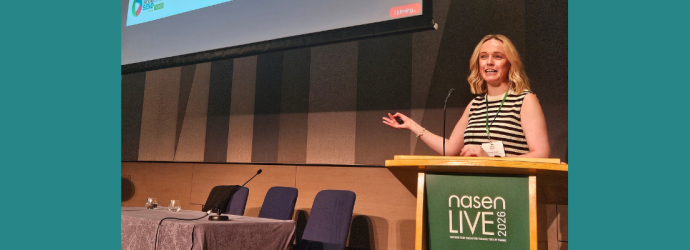
Dawn Cranshaw, a Regional SEND Lead for Whole School SEND, brought a real passion to her nasen LIVE 2026 session, with a promise not to talk about the reforms. Transition, she argued, is not a niche event. It is a life skill, something every child, young person and adult does throughout their lives, and it deserves the same care we give to teaching any other life skill from the moment a child is born. She posed a question that split the room down the middle: is transition in your setting, a barrier or a bridge? And is your programme designed to make life easier for administration, or to lower the anxieties of the children walking through the door?
Her challenge was to think wider, and deeper. Inclusion, she said, is messy, and it is not about every child learning the same way. Some learn to ride with stabilisers, some on a balance bike, some with 3 wheels, the point being not everyone learns the same way. It is 2026, and no school sets out to be un-inclusive, so the important question now is: How are we building relationships with children and young people to ensure not only to they feel they belong, but whether they feel they matter, where they are and where they are going next. That means equity, not just equality, because not every child needs the same transition, and it is often the children under the radar who quietly miss out at exactly these moments.
The data made the case for change stark. Between Year 6 and Year 7, exclusion rates rise and needs assessments spike, often in communication and interaction, the very things we see early and do not always address. Dawn also shared wider considerations, if a child or young person requires additional to and different from provision or support with transition, how can we provide the right things if we have not effectively listened to the child or young person? It pointed to a distinction she returned to again and again, between being child-focused, deciding what we think children need, and being genuinely child-centred, asking them.
She was honest and moving about the scale of the move to secondary. From one teacher and classroom to seven teachers, seven rooms, seven ways of learning. From a familiar peer group of years to a whole new social world. New rules, a new uniform, a new building, and puberty on top. She shared experiences of struggles by children, for example, the biggest anxiety was not grades, it was getting lost, and for weeks a child quietly skipped lunch so they would not be late to lessons, frightened of not getting there on time. Nowhere was that mastered anxiety, or that quiet struggle, ever recorded. If you do not know, Dawn said, you miss it. She asked the question at the heart of it all: some children may never be school ready, so why can we not make schools ready for the children?
Then came the practical hope, much of which costs nothing. Relationships are everything, and every child needs one person they connect with. For one child, that advocate was not the form tutor or the SENCO, it was the PE teacher, who greeted the child each day with have you got a joke for me. Paperwork should lead with strengths: stop writing what children cannot do, and start writing what they can, the things they love and care about, as a golden thread to build support around. Ask the children who have been through the year 6 to year 7 transition what helped the most an what could have been better, whether that is Year 7s running a Friday club back at their old primary, or the Year 7 who told an anxious Year 6 she could wear just enough make-up so you don’t get in trouble. Start earlier, too. When Dawn asked a Parent Carer Forum when transition should begin, the answer was Year 4, not the summer of Year 6, and it should not finish at the end of Year 7, especially as developmental trauma often surfaces more in Year 8.
She was clear that reasonable adjustments are not optional extras. Getting settings to consider policy change in line with the Children and Families Act. And she wove pupil voice through everything as the real golden thread. For example, when a young person asked to sit at the back of the class, not the front, so they could focus rather than worry about everyone behind them, and yet the school acted on what it thought was needed putting the student at the front near the Teacher. That, Dawn said, is the difference between child-focused and child-centred. Pupil voice is not completing a form and ticking a box. It is genuinely hearing what a child tells you, and letting it change what you do, responding to need not just making adaptations.
She was candid, too, about the systems that quietly work against children: homework that must be complete and on time, behaviour points for arriving late or for not putting a hand up, toilets locked between lessons so an anxious child has nowhere to go. Small print, perhaps, but for many children it is anxiety layered on anxiety, and simply noticing it is where inclusion begins and where small change could make a big difference.
Her closing thread tied transition to preparation for adulthood, which she reminded us starts not at 14 but from birth. Strong relationships between primary and secondary settings, information that is relevant and led by the child's own voice, buddying and mentoring, communication that says it is good to see you rather than why are you late, and targets that actually mean something. Done as a tick box, transition fails children. Done as a culture and an ethos, worked at all year round, it becomes exactly what her session title promised: not just transition, but transformation.