
Shared expertise, stronger schools: Matt McArthur on specialist-mainstream collaboration
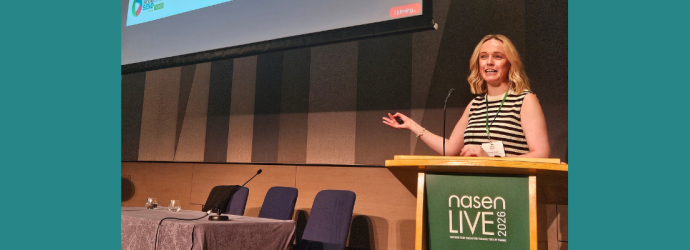
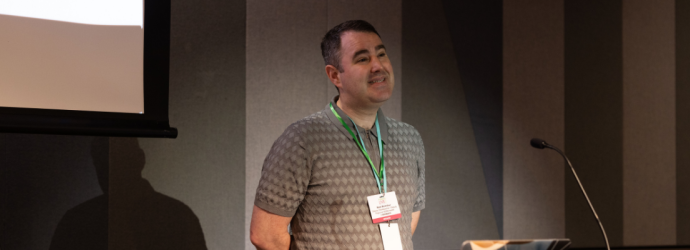
"Inclusion is not a destination we reach alone." With that, Matt McArthur, Deputy Headteacher and Special School Outreach Lead at Frank Wise School in Banbury, set out one of the most practical visions at nasenLive 2026. Inclusion, he said, is a culture built on the humility of shared expertise, the courage to recognise the limits of our own knowledge, and the courage to change our own internal structures.
His timing, he noted wryly, was fortunate. Just as he began talking about the collaborative model his school is part of in Oxfordshire, a significant national investment was announced to create a bank of specialist SEND teachers for schools to draw on, an on-demand expert service, making the theme of specialist-mainstream collaboration more relevant than ever.
The context is one every school will recognise. Needs are not only rising, they are growing more complex, with the number of children with an EHCP up by almost two thirds since 2016, and profiles that are increasingly multifaceted, with overlaps between different types of need and environmental factors. Meeting that, Matt argued, requires mainstream schools to review the load-bearing architecture of their provision: the people, the systems, the curriculum, teacher training and staff induction, all the processes that make up the whole offer. It also asks schools to reimagine what education is for, to stop doing some things they have always done, to start doing things they never have, and sometimes to rediscover what they used to do and have forgotten. It is not just about changing how we teach, he said, but about changing how we see what is possible.
Matt described his own setting with real warmth. Frank Wise is a special school for children aged two to nineteen with severe and profound learning needs, many of whom process the world differently and communicate through a rich range of non-verbal cues. Their curriculum focuses on the prerequisite skills of cognition, communication, interaction and personal and social development, taught at an individual pace. Their pedagogy is characterised by differentiation, and their assessment is largely qualitative, mapping out what a child can do rather than measuring what they cannot. This, he explained, is why special school teachers and leaders often think differently to their mainstream colleagues. Not because they are mysterious, but because they are used to working at a specialist level rather than a universal one.
That difference is the point. His invitation to mainstream schools was striking: see your local special school as your primary innovation partner. Special schools are experts in non-standard thinking and radical individualisation, and now is the time for mainstream schools to borrow those glasses to look afresh at the learners who challenge them most. But he was careful about what good collaboration looks like. This is not a special school telling mainstream what to do from an ivory tower. It is shared clinical curiosity, specialist and mainstream leaders working shoulder to shoulder to find the intersection of what is expert and what is genuinely implementable in a busy classroom.
The Oxfordshire model he described is built on cultural change and long-term capacity, not quick fixes. It is funded from the High Needs Block, free to all mainstream schools whatever their status or phase, and deliberately nimble. It brings together the county's special schools, and is triaged by a coordinator who is himself a former special school headteacher, matching each request to the right expertise. As Matt put it, it is not my job to come in and do your job for you. It is to build the capacity within your school so you can do it yourselves.
The work falls into two types. The first looks at the whole-school ecosystem: strategic conversations with senior leaders, coaching and mentoring, and time on the ground observing, followed by written reports full of concrete strategies teachers can use on Monday morning. The second is more intensive, helping schools rebuild internal specialist spaces, or inclusion bases, that are genuinely fit for purpose, with curriculum and assessment that track the small steps of progress, so that children are never simply warehoused or siloed from their peers. And the Frank Wise difference runs through both. We don't just tell you what to do, he said. We show you. Their staff bring their own resources into the classroom and model the teaching, relational and behavioural strategies live, and invite teams into Frank Wise to see them in a specialist setting, which, powerfully, removes the ceiling on expectations for what these children can achieve.
Out of this collaborative work, Matt has produced a guidance document to help primary schools set up their own internal spaces, or inclusion bases, well. Rather than a simple rating tool or an open-ended reflection, it takes the form of a progression document, setting out what to aim for and the developmental steps along the way, breadcrumbs, as he put it, to help a school work out where it is now and what its next step might be. As the EEF's guidance on implementation reminds us, change is not a single event but a process that happens over time, and trusts and local authorities are already adapting the document to fit their own contexts. He was refreshingly candid, too, that the work is quality assured by the local authority, an accountability he welcomed rather than resented, because it keeps the focus firmly on impact.
Underpinning it all was a simple truth about sequencing: you cannot learn D without A, B and C. Some learners need the prerequisites of cognition, communication and personal care taught explicitly first, skills the current teacher training model does not equip teachers to teach, otherwise the national curriculum will continue to be out of reach for some children. With just over 1,000 special schools to more than 20,000 mainstream schools, roughly one to twenty, Matt's case was clear. Share that specialist expertise strategically, and every school, whatever its designation, benefits.